
Author: Mihika (Child Guidance Counsellor) | 24th January 2026

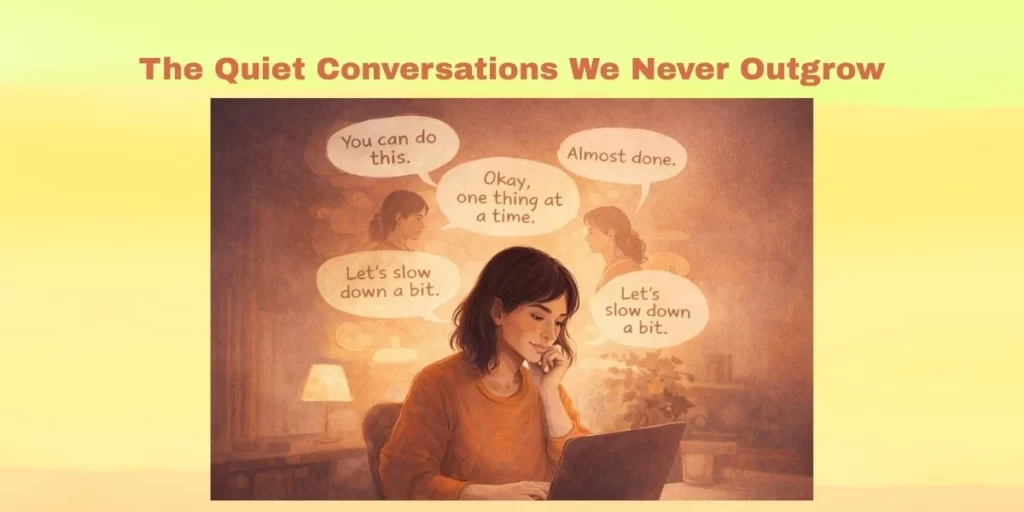
One afternoon I noticed that I was talking to myself while doing something completely ordinary. It was not a dramatic moment, not a crisis- just a gentle flow of instructions, reassurance and mild self- reflection. “Okay, one thing at a time…others after that.” I stood still, half amused, half ashamed, yet curious. Why do we do this so naturally—and yet feel the need to hide it?

That moment stayed with me. I started to think about how I often talk to myself, especially when I am tired, exhausted, or engrossed in something. It is not meaningless jabbering; it has a purpose, almost like I am holding my own hand in my hand all day long.
A few days later, while reading a work of Lev Vygotsky – a psychologist known for his contribution to child development – that small moment began to make sense.
Vygotsky described the concept of private speech i.e. talking to oneself, as one of the essential cognitive developmental processes. According to him, language is first used by children in the social context to interact with others. Over time, the external interaction is internalized. What starts as a social speech is now the private speech, and finally, turns into an inner speech – the silent self-talk we all carry within us.
He argued that this process is not incidental but foundational. Private speech acts as a bridge for the development of higher mental functions such as reasoning, self-regulation, planning, and problem-solving. It is not immature or odd; rather, it is language helping the mind organize itself.
The most remarkable part was that during the adulthood, this mechanism does not fade away. Private speech may become quieter or more subtle, but it often reappears when we are focussing on a task, solving a problem, or regulating our emotions. In those circumstances, talking to oneself is not strange, it is the mind trying to get in order and looking for clarity.
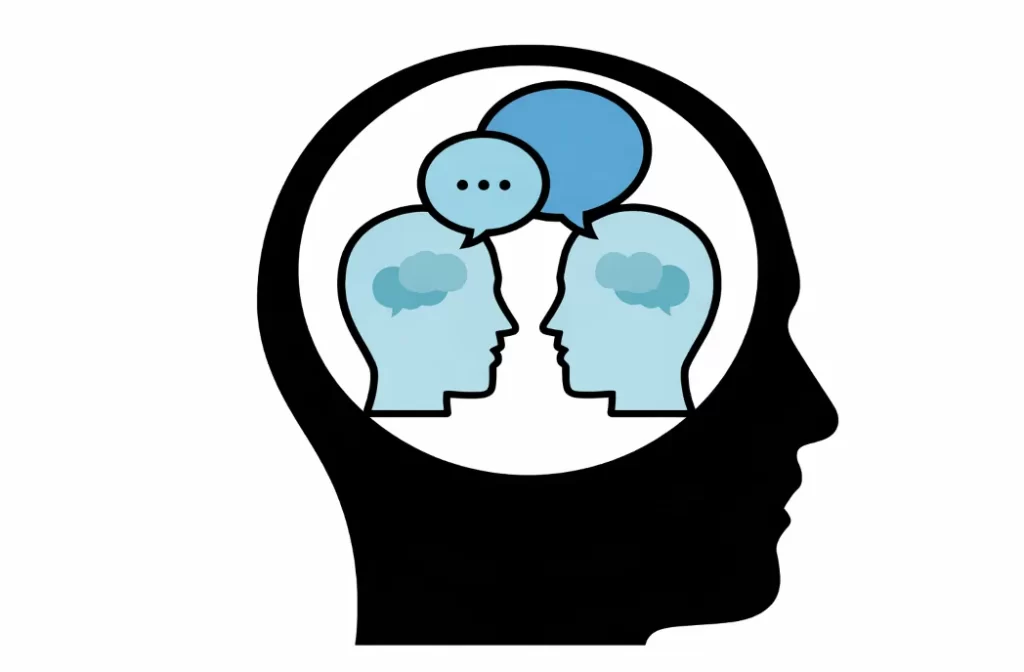
Now that I look at my own habits through this lens, I felt strangely relieved. Reminders of a task that needs to be done, gentle prompts to slow down and internal pep talks : they are all forms of self-scaffolding. Just as guidance from others once supported learning, language continues to support us from within.
Apart from theory, self-talk also carries emotional weight. There are times when my internal dialogue is kind and empathetic; there are times when it will be harsh or critical. Becoming aware of this has taught me that self-talk is not only about thinking, it is about relationship, that we have with ourselves.
Therefore, talking to ourselves does not connote loneliness or weakness. It is thought in action It is the mind figuring out the experience, emotion, and decision in real time. And when that inner dialogue is gentle rather than harsh, it becomes a source of grounding instead of pressure.
So now, whenever I find myself speaking softly to myself, I do not try to silence it. I listen. Because somewhere between a personal experience and the psychological theory, I have learned that these self-talk or quiet conversations that we have with ourselves are not something to outgrow ; they are to be comprehended.